

 By Isle of Wight Observer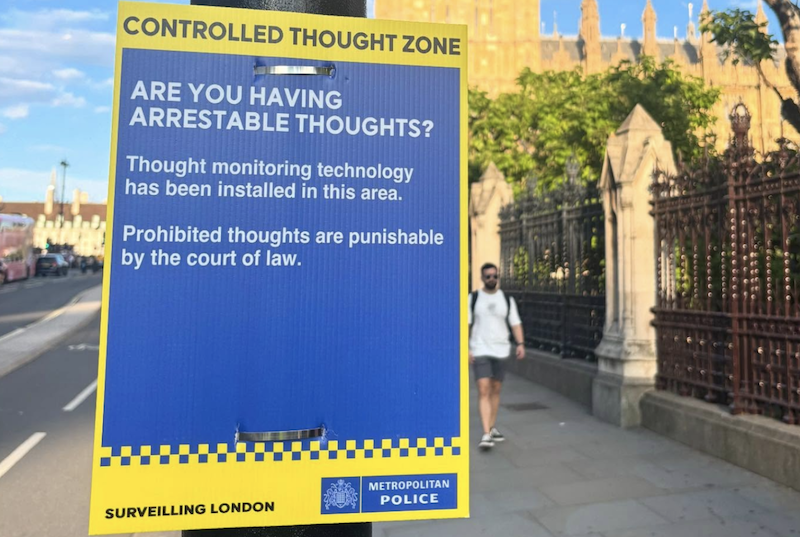

Two uniformed police officers walk into a riverside pub. They hadn’t gone for a pint, nor were they responding to a disturbance. Bizarrely, they only popped in to warn a customer that he might commit an offence. After decades of allowing their customers to sit outside and enjoy a quiet drink, a local councillor objected. Hounslow Council then informed the pubs that all chairs and tables must be removed, “for fear of causing a nuisance”.
Sitting by the river with a pint is a real pleasure on a sunny day. It makes London life bearable. Unsurprisingly, the customers were pretty put out that the local council banned their chairs. So one of them took to X and identified the councillor responsible. Before you could utter the words, “Get yer trousers on; you’re nicked”, the two cops showed up at the pub and asked the would‑be villain to come outside. The officers assured him that no crime had been committed but warned against “potential harassment”. This meant no referring to the councillor by name, nor identifying his home address.
Aside from the rights and wrongs of policemen warning people about ‘possible’ crimes (there was even a spoof poster campaign in London last year), when did councillors’ very public decision‑making become secret? Remember the fuss made here when some council candidates didn’t reveal their home addresses? It’s not a crime to disclose where someone lives, nor should it be. Even my very sensible opinions sometimes irk people; that doesn’t mean I need to go into hiding. We elect councillors to make tough decisions. They shouldn’t run to the police when someone names them.
When you’re the victim of an actual crime, the cops rarely respond. If you’re lucky, you’ll get a crime reference number. Obviously, the PCs in this case should have known better, but I’d bet they were following orders from poor management. When I suffered online fraud, the police wouldn’t even speak to me. To steal that kind of sum from a bank in the ’70s, you would’ve needed an old Jag, a car to switch to, and a decent wheel man to ensure your getaway. Jack Regan would have pursued you through the streets in a fast car and a team of armed squad officers. As far as I know, those on-line fraud thieves got away with it. There was no investigation, and the bank swallowed the loss due to its weak security systems.
Thefts like mine made the British banking system get its act together. Now, if you want to pay someone £12.50, they’ll send a text to your phone asking if it’s really okay. I dread new on-line payees; it’s all so time‑consuming. My bank makes me jump through so many hoops, it would be quicker to hand‑deliver the cash.
A mate served 30 years in the Met Police. After 15 years in the anti‑terrorist branch, his final post was a suburban police station investigating burglaries. “There are thousands of unsolved cases,” he told me, “and I have no chance of solving any of them.” When the sometimes years‑old thefts occurred, there was no forensic work. No fingerprints or blood swiping, hoping for a DNA match, nothing. In every single case, there had been no action taken; the crimes were simply recorded and marked ‘unsolved.’
Which begs the question: how do the police decide how they spend their time nowadays? In the good old days, local PCs knew who the villains were. A cop here told me if he was driving from Yarmouth to Newport and spotted a wrong ’un heading in the opposite direction, he would turn around and pull him over. His copper’s nose was his guide. Back then, police officers didn’t trawl social media or visit pubs looking for potential thought crimes!