

 By Carole Dennett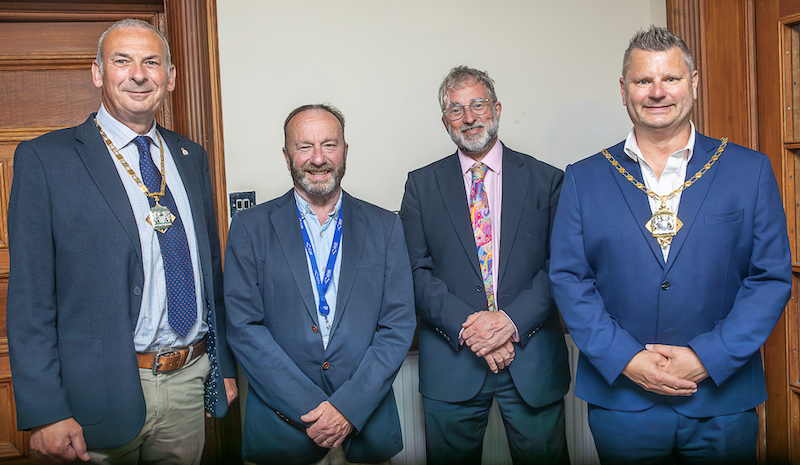
There is a new leadership team at County Hall – and for the first time it includes two Reform UK councillors, though both serve as deputies rather than taking the top posts themselves.
After Reform won 19 of the 39 seats earlier this month, many expected the group to run the council as a minority administration.
Others voiced concern that with 18 brand new councillors, the group lacked experience to run the authority. As reported last week, the Liberal Democrats attempted to exclude Reform from all significant roles, but when councillors gathered for the first full council meeting on Wednesday evening, the voting did not fall neatly along party lines. Enough members were willing to work with their new Reform colleagues to produce a very different outcome.
Independent councillor, Ian Dore, remains chairman of the Council, with Cllr Tony Barry of Reform elected as his deputy.
Independent councillor, Jonathan Bacon, was chosen as Council leader, supported by the Reform Group and others. His deputy is Cllr Bill Nigh, of Reform, the only Reform member to have previous experience as an Island councillor.
The Liberal Democrats had hoped their group leader, Andrew Barratt, would win the leadership, stating he would not serve with a Reform deputy. After losing the leadership vote by 28 votes to 9, he now finds himself serving as deputy to a Reform councillor on the Children’s Services, Education and Skills Committee.
The new council is divided into seven groups: Reform with 19 members; Island First Network – six; Liberal Democrats – four; All for Islanders – three; Conservatives – two; Green – two; and Labour with one. The Island First Network and All for Islanders are made up of councillors elected as Independents. Two further Independents remain unaligned with any group – Cllrs Bacon and Dore – who now hold the roles of Council Leader and Chairman.
For some, the election of Cllr Bacon as leader is controversial, as, in early 2017, he resigned from the same position, a point raised in the chamber on Wednesday. Speaking to the IW Observer, he addressed both the criticism and the new political landscape. He said his intention was to work “with all councillors and for all residents”, adding that while some comments made in the chamber were “unfortunate and unnecessary”, he intended to rise above them.
On the question of his previous resignation, he said: “We all have personal circumstances in the past that are historical now. But the issues of now are now, and we must deal with everything in the present as the people we are. We are 39 and we need to work together constructively.”
Asked about the council’s precarious finances, he said a “long, hard look” was essential. The authority had been seeking government assistance for some time, he said, and must “explore every avenue”, retrying options previously dismissed and searching for anything not yet attempted. “This council provides a lot of really important services, that isn’t always appreciated by some,” he said. “A lot of people rely on the council, and we need to do our absolute utmost to ensure that support is maintained and, if at all possible, improved.”
Reform’s decision not to seek control of the authority was explained by the group’s leader, Cllr James Whelan. He said the group had faced a choice: attempt to take every senior role and risk being frozen out entirely or negotiate. “We had to make a decision whether to go the whole hog, and have zero support on any of the committees, or any of the key positions so we would get no say, or we do a bit of negotiating with the other side, being pragmatic and thinking about the future of the Island, and not just the future of the Reform Party.” He added that he had discussed the approach with senior figures in the national party, who agreed it was the right route.

 Mal Butler