

 By Carole Dennett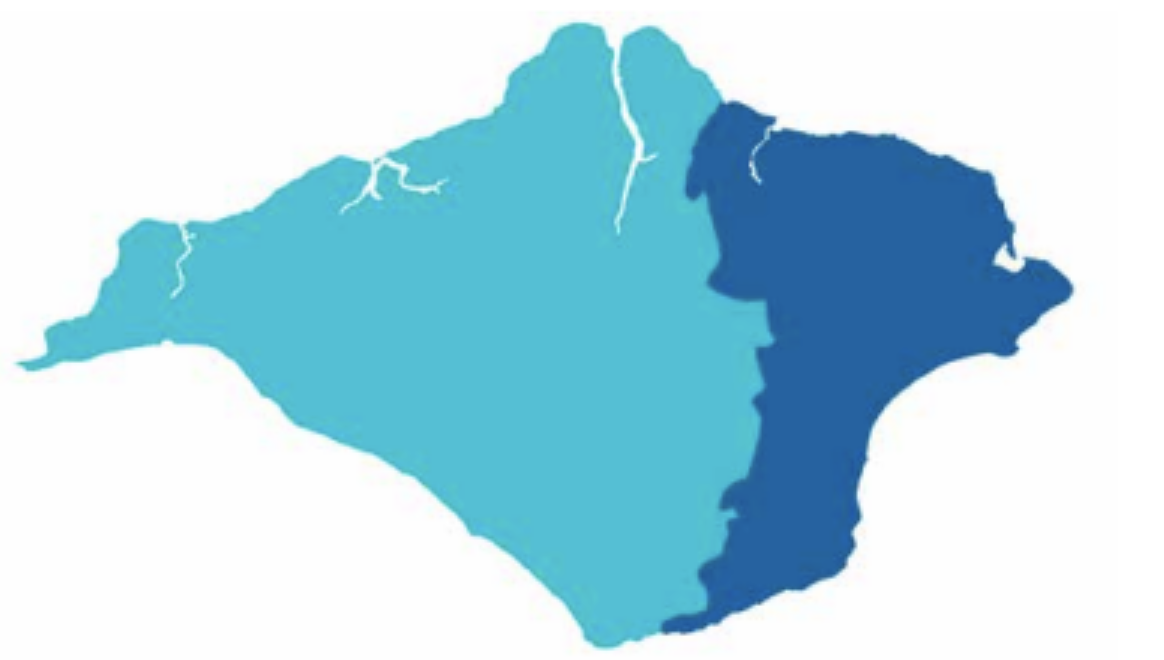

Just over two years into the current Parliament and, with a new Prime Minister, we looked at Electoral Calculus, the national political forecasting site, and its modelling and projections for both Isle of Wight parliamentary seats.
The predictions are based on the current national polls, demographic factors, and local election results; however, with three years left before the poll date, they reflect today’s realities rather than any meaningful forecast. If, as Harold Wilson said, “a week is a long time in politics”, then three years is an eternity.
The figures don’t take into account the unpredictability of Isle of Wight voters, who often vote contrary to national trends. In 1974, Liberal Stephen Ross achieved a massive 26 per cent swing to defeat Conservative Mark Woodnutt. The trend was reversed in 2001 as Andrew Turner beat LibDem Peter Brand in one of the rare victories for the Tories amidst the country’s second Labour landslide under Tony Blair.
Again in 2015 the Island showed its willingness to go against the main parties’ grain, with UKIP receiving 21 per cent and Green Party 13 per cent of the votes.
Isle of Wight West
According to Electoral Calculus, Reform will win the seat from Labour MP Richard Quigley in the next general election. The constituency, which includes Cowes, East Cowes, Newport, Freshwater, Yarmouth and all the villages of West Wight, gives Reform a 59 per cent probability to win, while Labour has 23 per cent and Conservatives third on 17 per cent.
Isle of Wight East
In the East, which comprises Ryde, Bembridge, The Bay Area, Ventnor & St Lawrence and the villages in the east, Electoral Calculus predicts a 59 per cent probability of the Conservative Joe Robertson holding on to his seat. Reform gets 39 per cent probability, while Labour’s prospects amount to a lowly 2 per cent. According to Electoral Calculus, there is a comfortable 8.4 per cent majority in store for Mr Robertson.
A long way to go
The results of the local election in May this year saw success for Reform in many IW wards. Electoral Calculus takes into account those local swings in its modelling, although it should be noted that local council elections usually give different results from the elections to Westminster.
Electoral Calculus also uses current national polls in addition to demographics of the constituencies, including age, income, housing type and previous voting behaviour. Of course, the results on the Island will also depend on who the candidates for all parties will be, which is currently unknown. So these projections cannot be taken as predictions, just as an illustration of what might happen if a general election took place today.
Over the next three years anything could happen – new leaders, economic shifts, scandals and other surprises, which would all affect the final result. Meanwhile, whatever Electoral Calculus projects, all bets are off until Islanders themselves decide who they want to represent them.
 Mal Butler