

 By Isle of Wight Observer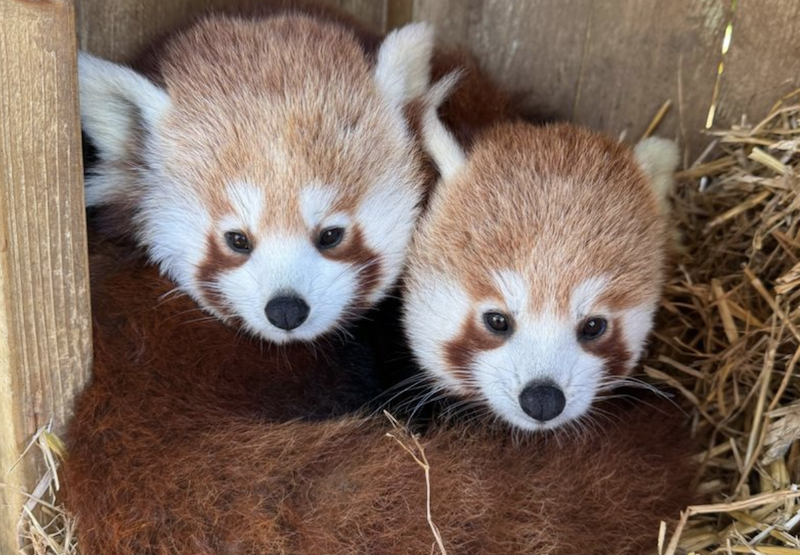
Two endangered red pandas, born at Amazon World Zoo Park, have begun the next chapter of their lives after moving to France, as part of an international conservation breeding programme.
Sisters Xiao Mei and Xiao Bao, known as Mei and Bao, were born on June 17, 2025, to parents Xiao Xing and Flint. Their arrival was a major success for Amazon World Zoo Park, where breeding red pandas plays an important role in safeguarding the endangered species.
The pair have now moved to Parc de l’Auxois, in France, to join the EAZA ex‑situ programme, which co-ordinates breeding across accredited European zoos to maintain genetically diverse populations of threatened animals.
Mei and Bao’s early life was challenging. During their first health check, both cubs were found to be underweight, prompting senior keepers to supplement feeds with puppy milk, while allowing their mother to continue caring for them naturally. The cubs were monitored closely using nest‑box cameras, and weighed twice weekly to track their progress. Although their mother later died from age‑related illness, the care provided by the keeping team ensured the sisters continued to thrive. Their move to France marks an important milestone for Amazon World, and highlights the vital role modern zoos play in conservation. Red pandas are classified as ‘endangered’, with fewer than 10,000 remaining in the wild, and numbers declining due to habitat loss, climate change, and poaching.
Amazon World has supported EAZA conservation programmes for more than 20 years, and will soon welcome a new female red panda to join Flint and continue its contribution to the species’ future.
Head keeper, Rachel Patrick, said: “Watching these two incredible red pandas grow from tiny cubs into independent young adults has been a highlight for our team. We will miss them, but sending them to France is a vital step for the breeding programme, and we are incredibly proud to support the conservation of this endangered species.”

 Mal Butler