

 By Carole Dennett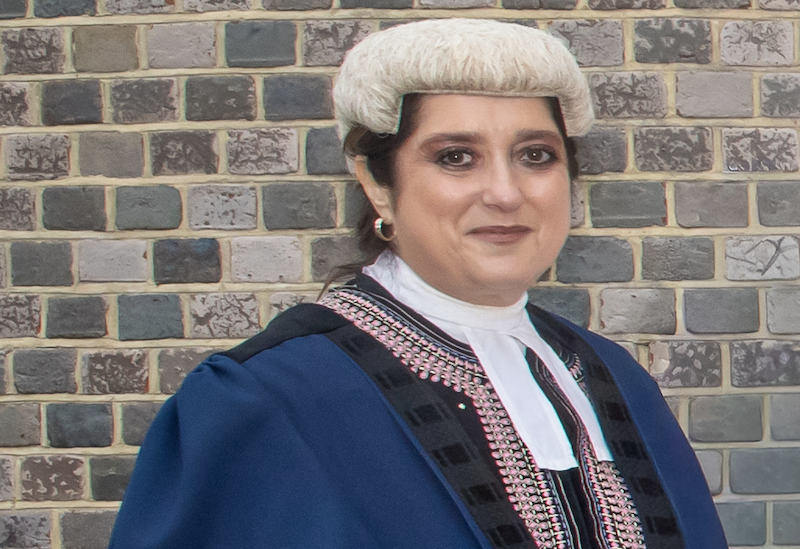

Islanders are paying tens of thousands of pounds a year for the Isle of Wight Council to fund complaints about the Island’s coroner – while bereaved families continue to endure the longest inquest delays in England and Wales.
A Freedom of Information request has revealed that £73,303, excluding VAT, was paid out over 2024/25 and the first ten months of 2025/26, relating to expenditure arising from “complaints or challenges to the Isle of Wight Coroner.”
The figure includes individual payments of £17,935, £14,045, £14,367 and £7,000, among others. Previous exchanges with the Council revealed that the coroner can claim these sums without providing any paperwork or evidence. The IW Observer contacted the coroner Caroline Sumeray to ask whether she had supplied documentation for the claims, but she did not respond.
Longest delays in England and Wales
The Island continues to suffer the longest inquest waiting times. The latest statistics show families now wait an average of 77 weeks for an inquest to be completed – up from 76 weeks in 2024, and more than double the average of 31 weeks.
The delay is difficult to explain. The number of deaths reported to the coroner fell from 679 in 2024 to 553 in 2025, while the number of inquests completed rose from 38 in 2024 to 277 in 2025. Ms Sumeray did not respond to our request for her to explain the discrepancies – despite stating last year that she wanted “complete transparency concerning my service.”
The number of completed inquests includes the now routine use of Section 9C reports, where the coroner concludes an inquest on paper without holding a public hearing. These reports are intended for cases where the facts are straightforward and uncontroversial, but the IW Observer is aware of families who objected to a 9C process, only to have their concerns overruled.
An inquest held in person allows evidence to be tested openly, with witnesses questioned under oath and families able to participate meaningfully. Legal experts say in person hearings are especially important where there are concerns about medical care, emergency response, safeguarding, or state involvement. Without a hearing, families cannot hear explanations directly from professionals, nor can the coroner probe inconsistencies or gaps in the evidence.
The Ministry of Justice’s own guidance stresses that inquests are a public judicial process, designed to ensure accountability and transparency. Some families believe the Island coroner’s heavy reliance on Section 9C reports undermines that principle and prevents them from finding out the full circumstances of their loved one’s death.
Years of concern and no scrutiny
The rise in waiting times follows of years of poor performance, including a formal misconduct warning issued to Ms Sumeray last year after an inquest took more than four years to reach a conclusion – a delay a judge said had “no reasonable explanation”.
Families have repeatedly told the IW Observer of long waits, poor communication, and the distress caused by delays – concerns echoed by councillors, who are unable to scrutinise the coroner’s performance because it is a judicial appointment.
Council: “Our hands are tied”
A spokesman for the IW Council said: “Parliament has seen fit to place a statutory duty on local authorities to indemnify coroners in specific circumstances. This requires councils to meet any reasonable costs a coroner incurs in connection with legal proceedings arising from their duties. It also covers the costs of disputing any claim that might be brought, any damages or costs awarded against the coroner, and any reasonable settlement of such proceedings.
“Because it is a legal duty, once the framework is invoked the council is obliged to provide the indemnity. It is not discretionary; it is a requirement set by Parliament.”
It is unclear how officers are supposed to judge whether costs are ‘reasonable’ if supporting paperwork is not supplied.
Both the Island’s MPs were unimpressed. Richard Quigley (West Wight) said: “The issues with the coroner are well known across the Island and I have spoken to many families who are distressed by delayed inquests. I thank the IW Observer for highlighting further issues. I will continue to work with Joe Robertson MP to find a solution to the ongoing problems.”
Joe Robertson (East Wight) added: “The failures in our Coroner Service are not only causing undue distress to families, they are costing Island residents money. The service appears to be going backwards despite all the extra support and resources it has been given. The Coroner doesn’t seem to be accountable to anyone and frankly, it would be better if the service was merged with Hampshire. The Coroner doesn’t live on the Island anyway, and is rarely here.”
Ms Sumeray failed to respond at all to emails asking for a comment.
Parliament may force the council to pay up — but it’s Islanders who bear the cost of our failing coroner service, both financially and emotionally.
 Mal Butler