

 By Isle of Wight Observer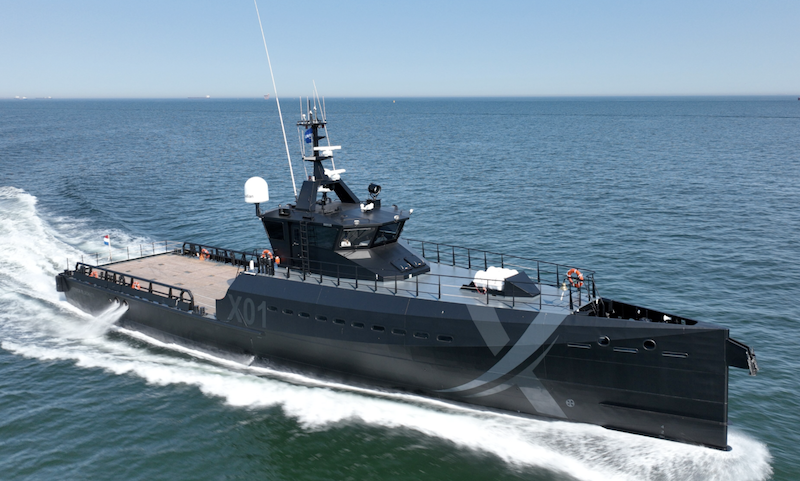

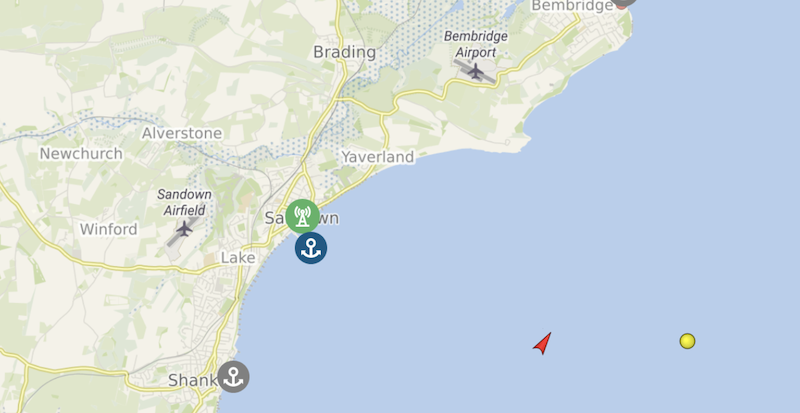
The south coast of the Isle of Wight served as a backdrop for a glimpse into the future of maritime warfare on Tuesday, as the Royal Navy’s striking, matte-black experimental vessel, XV Patrick Blackett (X01), was spotted conducting trials.
The 42-metre, 270-ton ship, distinctive for the large QR codes on its hull, spent the afternoon navigating the waters off Ventnor. The vessel is not a front-line combat vessel, but a dedicated floating laboratory for NavyX, the Royal Navy’s specialist team tasked with the transition of the Royal Navy to a hybrid fleet of crewed and uncrewed systems.
Operating out of Portsmouth, the Patrick Blackett acts as a bridge between laboratory concepts and front-line reality. Activity off the Island included testing advanced AI decision-making software, such as the Guardian Helm stack. This technology is designed to allow ships and accompanying drone swarms to navigate complex environments with minimal human intervention. By using the vessel as a command hub, the small crew of five Royal Navy personnel can monitor and co-ordinate remote “wolf packs”, of uncrewed surface vessels (USVs). Recent breakthroughs have even seen these autonomous boats being remotely piloted from over 500 miles away, demonstrating the long-range abilities that the Patrick Blackett is designed for.
The ship’s physical design is as modern as its software, featuring a “plug and play” approach to naval architecture. The 140-square-metre work deck is equipped with the ability to support the Persistently Operationally Deployed Systems (PODS) concept. These allow the ship to be rapidly reconfigured for specific missions, whether launching uncrewed aerial vehicles (UAVs) for reconnaissance, deploying underwater drones for mine-hunting, or testing new directed-energy weapons. This flexibility enables the Royal Navy to trial diverse payloads – from medical aid kits to precision strike drones – without permanent, costly modifications to the ship.
The vessel is named after the winner of the 1948 Nobel Prize for Physics, Patrick Blackett for his discoveries in nuclear physics and cosmic radiation. Using it for experimentation avoids the need for the Royal Navy to divert frontline shipping away from global deployments.