

 By Isle of Wight Observer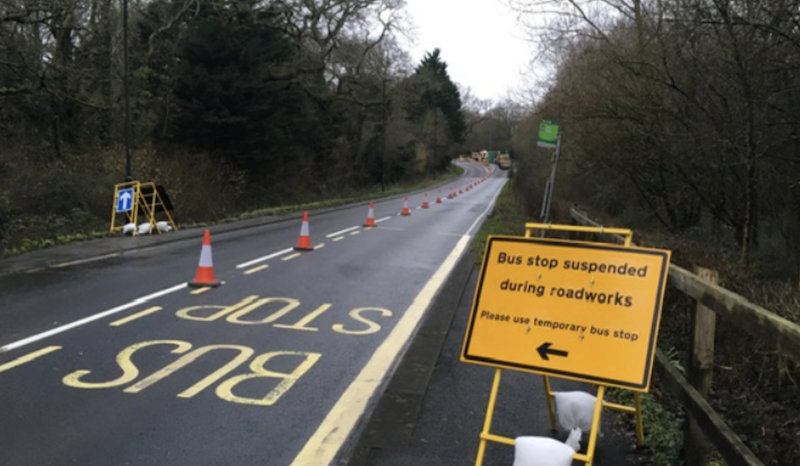

Quarr Abbey is planning how to recover from the “severe and escalating” impact of recent roadworks, and is urging Island Roads and utility companies to overhaul how they plan and communicate major infrastructure projects.
A detailed report by Tracy Osborn, the Abbey’s director of fundraising and operations, sets out the financial, operational, and community consequences of months of disruption, and calls for a more collaborative approach to protect Island businesses and residents in future.
The Abbey, which normally welcomes 116,000 visitors a year, relies entirely on public support. With no funding from the Catholic Church, its £1.3 million annual running costs are met through its teashop, farm shop, monastery shop, holiday cottages and charitable activities. Quarr employs 35 local people and is supplied by around 75 Island businesses, making it an important contributor to the wider economy.
Since January, however, poorly-communicated road closures, diversions, and access restrictions have caused a dramatic downturn in trade. Income shortfalls reached £18,500 in January, and forecasts show a further £90,000 loss if works continue as planned.
The disruption goes far beyond lost income. Staff, volunteers, and local residents have faced considerable inconvenience, and longer and more expensive journeys. The uncertainty has also affected day‑to‑day operations: recruitment for vacant roles has been paused, and the Abbey has been unable to place at least £35,000 worth of orders with local suppliers – a blow to the wider Island economy.

The Abbott of Quarr Abbey, Father Xavier Perrin, also expressed concerns on behalf of the monastic community. He said: “The disruption has certainly caused spiritual detriment, to those for whom regular visits to Quarr as a sanctuary of prayer and peace, are essential.” The numbers of Islanders attending mass on Sundays and visiting the church on weekdays have fallen dramatically – with a resulting loss in donations adding to the financial challenges.
Tracy says the problems stem from a “complete lack of coordinated consultation” between agencies and with affected organisations. The first the Abbey heard of the roadworks was from media reports, and it was never informed about suspended bus stops, unexpected traffic lights installed on its own land, or the reality of access problems. Assurances that visitors would be able to reach the site from Newport and Fishbourne were unfounded. Much of the information received from Island Roads was “inaccurate or incomplete”, she said.
“Consultation needs to happen far earlier, with a genuine willingness to work together,” Tracy told the IW Observer. “There was no understanding of the complexity and scale of the Abbey’s operation. We were not contacted until January – too late to change many of our plans. And the Island’s economy is inter related; when one organisation is hit, the effects ripple outwards. Agencies must understand that and plan accordingly.”
More disruption to come
She acknowledges that Southern Water has recently shown a more proactive approach – attending a meeting, improving signage and allowing better coach access – but stresses that this came too late to prevent significant damage. She singles out Steve Knight of Clancy, Southern Water’s contractors, for his clear communication and problem solving. “If effective communication had been in place from the start, some of the worst impacts could have been avoided,” her report notes.
Wider reputational harm caused by daily social media posts, from frustrated residents and visitors is also highlighted, creating “a prevailing negative narrative” about Island travel and accessibility. This has also deterred tourists and affected businesses. Four holiday cottage bookings have already been cancelled, a further £4,500 loss.
And the disruption is far from over. Even when the current works ends, less than half of Southern Water’s pipe replacement programme will be complete. So far, 5.5km (3 1/4miles) of pipe has been replaced, with 7km (4 1/2 miles) still to go – meaning further unnecessary financial damage, unless lessons are learned.
Tracy is clear that the Abbey is not seeking to halt essential upgrades. Instead, she wants organisations to adopt a co-ordinated, transparent, and community-focused approach. Her recommendations include early engagement with all affected organisations, clear project timelines, realistic diversion planning, effective signage and a transparent, simple compensation process that reflects the real losses businesses face.
“Quarr Abbey has served the Island for many years,” she says. “We are resilient, but no organisation can absorb this level of disruption without consequences. We want to work constructively with Southern Water, Island Roads, and others, to ensure future phases are managed in a way that protects the community, the economy, and the Island’s reputation.”
She hopes agencies will recognise the value of genuine partnership before the next phase begins – and urges Islanders to support affected businesses wherever possible. “We will weather this, but some businesses genuinely fear they may not survive. If you can support us through these difficult times, we will all appreciate it.”
A spokesman speaking on behalf of the Isle of Wight Council and Island Roads said: “We recognise the impact these works are having on residents and businesses, and thank them for their understanding and co-operation.
“Southern Water and other utility companies have a legal right to carry out work to maintain and improve infrastructure. We cannot prevent this activity, but we work with them to minimise disruption.
“While the Traffic Management Act 2004 includes powers to help keep traffic moving, these must be used reasonably and proportionately. We can permit extended working hours, including 24-hour working, but we cannot compel a utility to do so. For the Elenors Grove project, the size of the worksite, deep excavations, and multiple boreholes, mean it would not be safe to reopen the road fully during the day, even with night work.
“The work is outside of the main tourism season to help reduce impact and collectively we have improved signage to make it clear local business remain open during work. However there is no ‘good time’ to undertake large projects on main roads, and some disruption is unfortunately inevitable, particularly on an island where diversion routes are limited.”
A spokesman for Southern Water apologised for the disruption and said: “The works to replace a water main are scheduled to finish on March 27 and will improve the reliability and service to customers and reduce the number of bursts and road closures which have caused disruption in the past.
“We have engaged with residents and businesses prior to the work starting to give as much notice as possible and talk through what impact the works will have.”
 Mal Butler